This is a theological post. If you think you won't like reading this, you probably shouldn't read it. No hard feelings — scroll on and I'll see you at the next one.

What might heaven look like? John Martin, The Plains of Heaven (1851–53). Public domain, via Wikimedia Commons (Google Art Project).
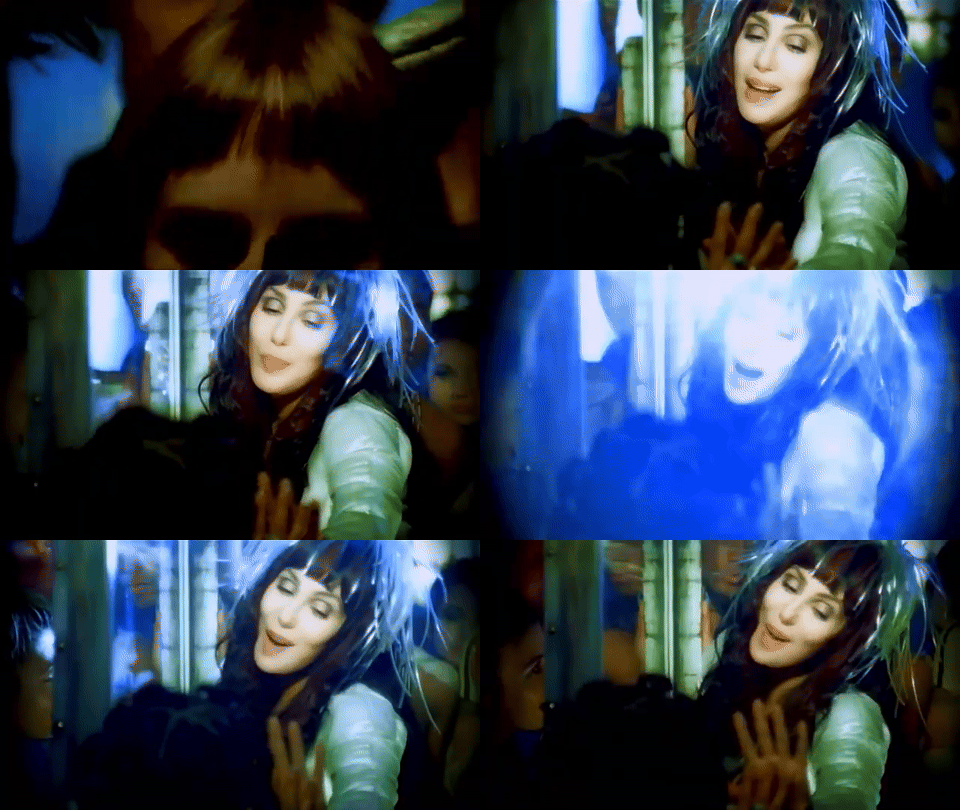
Cher's "Believe" has been stuck in my head for years, and not for the reason you might think. The chorus asks, "Do you believe in life after love?" — life after a love has ended, after heartbreak. But I think I have always heard it slightly wrong, purposely or subconsciously. I hear "life after life." And I mix the two together too — "love after love" — love that keeps going after love, love that never ends. Either way, my mind goes straight to eternity. Does yours?
Some of the lyrics
Do you believe in life after love? I can feel something inside me say I really don't think you're strong enough, no
— Cher, "Believe" (1998). Full lyrics
John 3:16 (NIV) says, "For God so loved the world that he gave his one and only Son, that whoever believes in him shall not perish but have eternal life." Believing isn't just thinking something through. Belief moves when you live it, and love is the power behind it. Jesus calls himself the author and the sustainer of life. He is the bread of life, and the water of life. If we drink of him, we will never thirst again. That is the life after life the song keeps pointing me toward.
C. S. Lewis does a great job of condensing big ideas into a story, and The Great Divorce is one of his best books, in my opinion. He talks about heaven not in terms of what it would look like, but in terms of the decisions we make each and every day. Heaven and hell are not two sides of a coin — that is a spatial and philosophical error. Hell is the free choice to be away from God. And heaven is so much bigger than hell, like the tip of a needle next to the whole universe. In John 14 Jesus says there are many rooms in his Father's house, and he is going to prepare a place for us. He goes to the cross, he dies, he rises again, and that shows us the way toward eternity with him.

The bus ride from the grey town. Fellowship for Performing Arts' production of The Great Divorce, New York, 2019. Photo by Michael Frederic, via NarniaWeb.
But I know this is not an easy topic. I talk a fair amount about suffering, and about bad things happening to good people throughout history — and it is not easy to address. Some people feel they have very legitimate reasons not to believe in a loving God. Some people don't believe God is loving — even some Christians — and that can have a huge impact on how the world sees God. People hurt others so much, people of faith and people not in faith. And then there are natural disasters. I am aware of all of this, and I think about it a lot. I don't have a neat answer, and I don't think there is one. What I want to focus on instead is another angle, from The Great Divorce: that being with God is the cure for the pain of what we have been through, and what we may still go through in this life. When we try to explain suffering through any lens other than God being loving, and still giving us free will — and the consequences of the Fall — the answers don't hold. "God is sovereign" is true, and he is. But he has also given us the freedom to choose him, and a blanket answer like that, on its own, can be very problematic. Simple answers to suffering can do real harm.
That is why I love stories like The Great Divorce: they give us space to consider this from many points of view, and they take us straight to Jesus — the creator of all, our healer and our friend — and to our own free will.


Fellowship for Performing Arts' production of The Great Divorce. Carol Halstead on stage. Photo by Jeremy Daniel.
And look at how Jesus himself does it. He invites — he never forces.
"Come to me, all you who are weary and burdened, and I will give you rest. Take my yoke upon you and learn from me, for I am gentle and humble in heart, and you will find rest for your souls. For my yoke is easy and my burden is light." — Matthew 11:28-30 (NIV)
"Here I am! I stand at the door and knock. If anyone hears my voice and opens the door, I will come in and eat with that person, and they with me." — Revelation 3:20 (NIV)
He waits for us to open it. And the people he is angry with are not the broken ones, or the ones who got it wrong. His anger is for the religious elite — the ones who load people with rules and shut the door in their faces.
"Woe to you, teachers of the law and Pharisees, you hypocrites! You shut the door of the kingdom of heaven in people's faces. You yourselves do not enter, nor will you let those enter who are trying to." — Matthew 23:13 (NIV)
"So he made a whip out of cords, and drove all from the temple courts, both sheep and cattle; he scattered the coins of the money changers and overturned their tables. To those who sold doves he said, ‘Get these out of here! Stop turning my Father’s house into a market!’" — John 2:15-16 (NIV)
He turned over the tables in the temple — but he sat down and ate with the people everyone else had written off. Which Jesus do we show people — the one who knocks, or the one who shuts the door?
A few thoughts on these verses:
Matthew 11:28-30 — I reckon we all would like more grace and to know Jesus like this.
Revelation 3:20 — I reckon we'd all like someone who knocks and waits, instead of forcing the door.
Matthew 23:13 — I reckon most of us have felt shut out at some point. I wonder who was doing the shutting.
John 2:15-16 — I reckon we'd all like to know a Jesus like this — one who stands up for the house of prayer, then sits down with the people everyone wrote off.
I've written about this before — in Suffering, Surfing and Jesus and in Faith and Life in Jesus — and I'm still on the journey myself. As Jesus walks up to you, he invites you to follow, and from the point we take hold of what he offers, we are on a journey with him. My closest friends and I talk about these things, and we admit how challenging they are. Nothing here is neat, and we don't pretend it is. I hope you and I can talk like that too — in the comments, in conversations, working it through together.
What I keep coming back to is this: "However, as it is written: ‘What no eye has seen, what no ear has heard, and what no human mind has conceived’ — the things God has prepared for those who love him." That is 1 Corinthians 2:9 (NIV). None of us can perceive what God has prepared. And Lewis, in The Great Divorce, writes that "Heaven, once attained, will work backwards and turn even that agony into a glory." Could that be the recompense — being with God, and the horrors of life healed as he brings us to him, in eternity, in the new heavens and the new earth? In The Magician's Nephew, Aslan sings a whole new world awake: "Narnia, Narnia, Narnia, awake. Love. Think. Speak." I have said Narnia imagines a world that is not fallen. What if the new heavens and the new earth are like that — a world made new? Lewis, writing as the demon Screwtape, put our situation the other way round: "The humans live in time but our Enemy destines them to eternity."
Near the end Cher sings, "I don't need you anymore." We know she is singing about a relationship with a person — walking away from someone who hurt you. But what if we applied those words to God? Saying "I don't need you" to God is something I think we have all said or done at some point. And yet God always welcomes us to him. We just need to look again at who God is — three in one, and most tangibly before us in the scriptural account of who God is: Jesus. Lewis wrote that in the end there are only two kinds of people: those who say to God, "Thy will be done," and those to whom God says, in the end, "Thy will be done." I wonder which one I am saying most days. We always need the bringer of life. If everlasting life comes through believing in him — and that is what John 3:16 says — then needing him isn't a weakness, it is the whole point. I need him today, and I will need him forever.
So, do you believe in life after love? I do. And I think the life after it never ends. What do you think?


The angel shows John the New Jerusalem. Gustave Doré, The New Jerusalem, engraved by H. Pisan (1866). Public domain, via Wikimedia Commons.
More
- Cher's "Believe" on Spotify: https://open.spotify.com/track/2goLsvvODILDzeeiT4dAoR
- Rich Mullins' "Hold Me Jesus" on Spotify: https://open.spotify.com/track/4T9ohPhyjEcQLiG1dQUCRR
- Watch the video: Cher's "Believe" (Official Music Video) — https://www.youtube.com/watch?v=xY4VfHbHSdw
- The Great Divorce on stage: Fellowship for Performing Arts — https://fpatheatre.com/production/c-s-lewis-the-great-divorce-2/
- C.S. Lewis — official site: https://www.cslewis.com/
- Rich Mullins — official site: https://www.richmullins.com/
- Read this on Substack: https://jonamccallum.substack.com/p/do-you-believe-in-life-after-love
My home on the web is jonathanmccallum.com.
Comments Loading… ▾
Sign in with Google to join the conversation.