
The Great Wave off Kanagawa, Katsushika Hokusai (c. 1831), public domain.
I watched a video about learning Japanese by listening, and I am applying the same method to Basque and Japanese.
Watch the video: — Trenton explains the whole method in 21 minutes. It is worth your time.
The video is Trenton's
. His point is simple: we pick up a language by understanding it, not by studying it like a maths problem. His method is called immersion. You listen to real language, a lot of it, and your brain does the rest.Here it is, in short.
First, input comes first. Listening to real language is what builds understanding. Grammar helps, but it is only a helper. You learn the basics — the sounds, the way sentences fit together — and then you get on with listening.
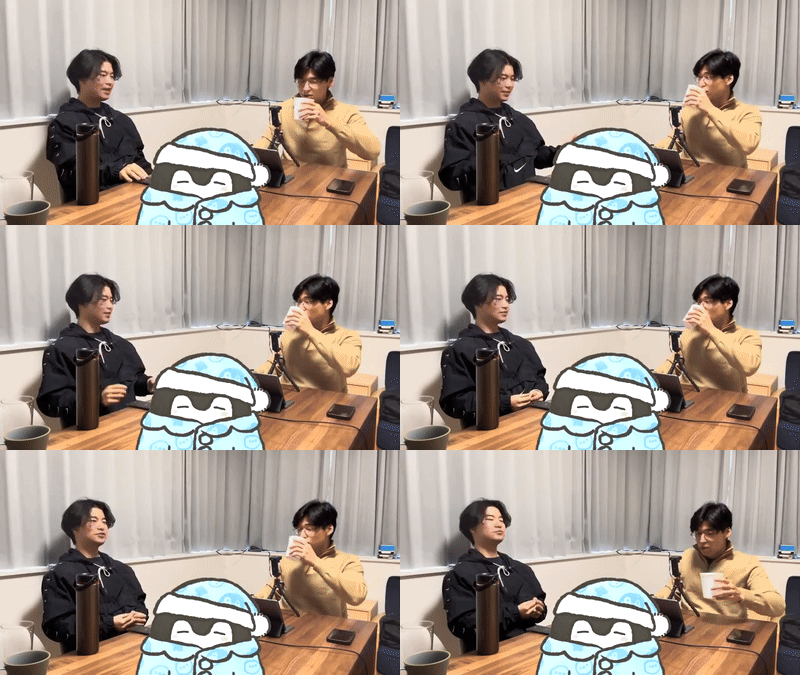
Real conversation is the best listening practice. A moment from Trenton's video.
Second, you have to be okay with not understanding. When you start, most of it will pass you by. That is normal. You keep listening anyway, and little by little more of it makes sense. If you wait until you can understand everything before you take the subtitles off, you will wait for ever.

Keep listening, even when you don't understand yet. A moment from Trenton's video.
Third, listening can happen while you do other things. A podcast in your ear while you walk. A video while you cook. It all counts.
Fourth, a few new words a day is enough. Trenton uses Anki, a flashcard app, and learns about ten new words a day. I am keeping it smaller: five words a day. Small and steady beats big and short-lived.
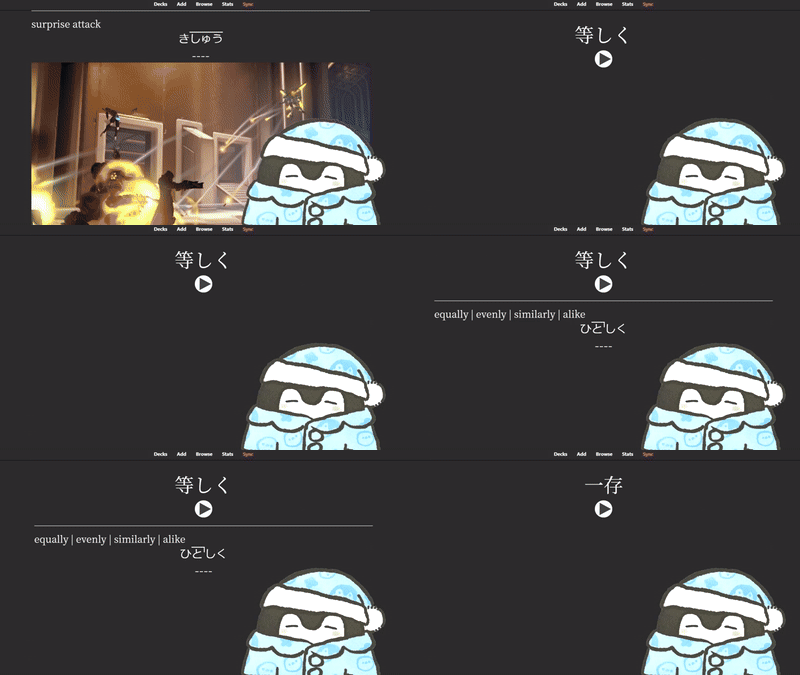
Anki in action — a word learned from something watched. A moment from Trenton's video.
And he is honest about the time it takes. Learning Japanese well takes years and thousands of hours. There is no shortcut. That is fine. I am here for the long run.

The opening of Trenton's video, "Learning Japanese Isn't Actually That Hard" (2024). Watch it here: https://youtu.be/7fvCb5_Nzq4
So here is what I am doing, and what this article is about.
This article skips over reading and writing. It is about speaking and understanding. Those are the two things I want most: to understand what people say, and to speak back simply.
My listening material is the Gospels — the New Testament. I listen to the words of Jesus in Basque and in Japanese. The stories are short, the words are plain, and I already know what they mean in English, so I can follow along. My Japanese site already carries the whole New Testament in Japanese. For Basque, I listen where I can find it — and I hear Basque every day where I live, in the streets and shops of the Basque Country.
On the Japanese version of this article you can listen to the first chapters of the Gospels in Japanese — there is a player there, no sign-up needed.
Each day, a little:
- Listen a little. Ten minutes of the Gospels in Basque or Japanese, while I walk or do something else.
- Learn five new words. Words I heard while listening, or words from a conversation.
- Say something real. One short conversation, in Basque or in Japanese, with a real person.
That is all. A little listening, a few words, one short conversation — every day.

Red Fuji (Fine Wind, Clear Morning), Katsushika Hokusai (c. 1830–1832), public domain.
I will keep going, a little at a time. If you are learning a language too, what do you listen to?
Comments
Sign in with Google to join the conversation.